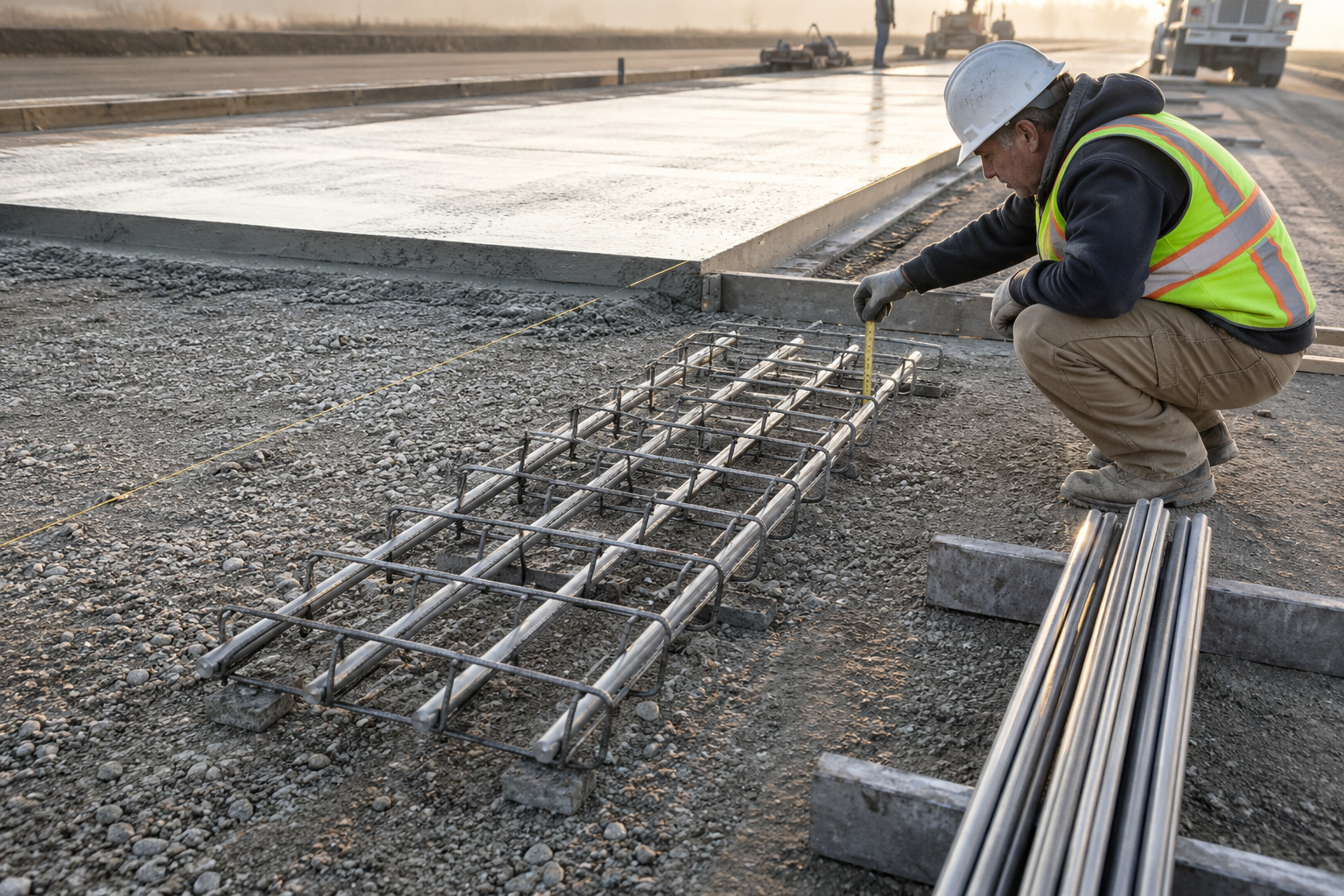
Comparing Dowel Baskets vs. Rebar Dowels requires more than looking at the diameter or strength of the steel. The products may appear similar, but their placement, alignment, bond characteristics, and intended role within a concrete system can lead to very different performance.
Triumph Construction Supply helps contractors source the concrete products needed for pavement, flatwork, structural, and commercial construction. Understanding how each dowel option functions can help project teams follow the plans, protect joint performance, and avoid preventable installation problems.
Dowel Baskets vs. Rebar Dowels: Which Option Is Stronger?
In a comparison of Dowel Baskets vs. Rebar Dowels, neither option is automatically stronger in every application. A dowel basket provides a supported assembly that keeps smooth dowels properly spaced and aligned across a planned concrete joint. Individual rebar dowels may provide a direct steel connection, but their performance depends heavily on bar type, placement, embedment, and the purpose of the joint.
The better choice is the one specified for the concrete design. For pavement joints that must transfer wheel loads while permitting horizontal slab movement, a properly installed dowel basket is often the practical solution. Individual dowels may be appropriate when a design requires continuity or a connection between separate concrete placements.
Why Joint Movement Matters as Much as Steel Strength
Concrete expands, contracts, curls, and shrinks as temperatures and moisture conditions change. A joint must manage that movement without allowing adjacent slabs to lose support or develop a significant elevation difference. This is why the tensile strength of the steel does not tell the entire story.
Smooth dowels supported by baskets can transfer loads across a joint while allowing controlled movement along the length of the bars. Deformed reinforcing bars bond more firmly with concrete and may restrain movement. That bond can be useful in some construction joints, but it can work against the intended function of a movement joint if the wrong product is installed.
Common Problems Caused by Incorrect Dowel Selection
Using a familiar steel product as a substitute for the specified joint system can create long-term problems. Even strong steel cannot compensate for poor alignment, inadequate embedment, improper spacing, or a bar surface that prevents the required movement.
Potential problems include:
- joint locking caused by excessive bond or misaligned dowels
- uneven load transfer between adjacent concrete panels
- cracking near the joint or slab edge
- joint faulting under repeated vehicle traffic
- difficulty maintaining the specified concrete cover
- movement of individual bars during concrete placement
Contractors should review the project drawings and specifications instead of making a field substitution based solely on bar diameter. Technical resources from the American Concrete Institute can also provide broader guidance on concrete materials, design, and construction practices.
How Dowel Baskets Support Accurate Placement
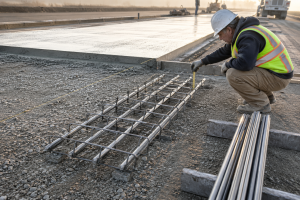
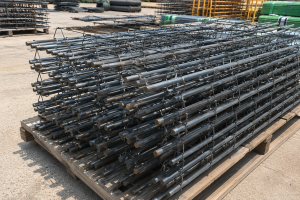
A dowel basket arrives as an organized assembly with parallel dowel bars held at the required spacing and elevation. The basket is positioned at the planned joint, secured to the base, and checked before concrete placement. Its frame helps prevent the bars from shifting while the crew places and consolidates the concrete.
Alignment remains essential. Dowels that are skewed horizontally or vertically may restrict joint movement, even when the basket itself is the correct size. Crews should verify the centerline, orientation, stability, and specified concrete cover before the pour begins. Contractors planning larger pavement projects can also coordinate dowel basket delivery early enough to support staging and inspection.
How Individual Rebar Dowels Are Installed
Individual dowels are commonly drilled and epoxied into existing concrete, cast into a slab edge, or supported before a second placement. Each bar must be positioned at the specified depth, spacing, and angle. Because there is no welded basket frame holding the complete group in place, installation consistency depends on careful layout and field execution.
The project documents should identify whether the bars are smooth dowels, deformed reinforcing bars, coated products, or another specified type. These distinctions influence bond and movement. A contractor sourcing individual bars can review Triumph Construction Supply’s rebar supply expertise while confirming the material required for the job.
Choosing Dowel Baskets vs. Rebar Dowels for the Application
The decision should begin with the joint’s intended function. Pavement joints exposed to repeated vehicle loads typically need consistent load transfer and controlled movement. Structural connections, slab extensions, and some construction joints may require a more restrained connection. Engineers consider slab thickness, traffic, joint spacing, soil support, bar dimensions, coating, embedment, and environmental exposure when developing the details.
Product availability and installation speed also matter, but they should not override the design. Triumph Construction Supply has served contractors since 2010, and the team’s construction supply experience can help customers confirm product information, obtain quotes, and coordinate deliveries without changing an engineered specification.
Benefits of Matching the Dowel System to the Design
Correctly selected and installed dowels help adjacent concrete sections work together under traffic or other imposed loads. Consistent load transfer can reduce stress along slab edges, improve ride quality, and support more reliable joint performance over time.
The right system can also make installation easier to inspect. A basket gives crews a visible, organized layout before the pour, while individually placed dowels allow targeted connections where a complete basket assembly would not fit the construction method. In either case, accurate placement is more valuable than choosing a product merely because it appears heavier or stronger.
When a Pavement Project Requires Consistent Load Transfer
Consider a distribution facility near Dallas preparing to place a large concrete truck court. The joints will experience frequent loads from trailers and delivery vehicles, so consistent dowel alignment is essential. Comparing Dowel Baskets vs. Rebar Dowels helps the project team recognize that loose bars would require considerably more individual layout and support.
If the plans specify baskets, the contractor can order assemblies that match the slab and joint details, stage them by pour area, and verify alignment before concrete arrives. The organized approach reduces field variability while preserving the movement and load-transfer behavior intended by the design.
Key Takeaways for Concrete Contractors
Dowel basket assemblies and individual dowels are not interchangeable simply because both contain steel bars. Their performance depends on the joint design, bar surface, alignment, embedment, spacing, and installation method.
- Follow the engineered plans and specifications.
- Evaluate joint movement as well as load-transfer strength.
- Confirm bar type, dimensions, coating, and spacing before ordering.
- Secure every basket or individual dowel against movement during placement.
- Coordinate materials early to prevent unsupported field substitutions.
Frequently Asked Questions About Concrete Dowels
Are dowel baskets made from rebar?
Dowel baskets contain steel dowel bars supported by a welded wire frame. The dowels are generally designed for load transfer across joints and should not automatically be treated as conventional deformed reinforcing bars.
Can individual dowels provide the same load transfer as a basket?
Individual dowels can transfer loads when their material, spacing, embedment, and alignment match the design. A basket primarily improves consistency by holding multiple dowels in their planned positions during placement.
Why are smooth dowels used at movement joints?
A smooth surface allows concrete sections to move along the dowel while the bar continues transferring loads across the joint. A deformed bar may create more bond and restrict that movement.
What information is needed when ordering dowel baskets?
Provide the project specifications, slab thickness, dowel diameter and length, joint spacing, coating requirements, quantities, and delivery schedule. Complete information helps the supplier identify the correct requested product.
Does Triumph Construction Supply deliver outside Kansas City?
Triumph Construction Supply serves contractors throughout the central United States and offers nationwide delivery on many products. Delivery availability can be confirmed when requesting a quote.
Source the Correct Dowels for Your Concrete Project
For help sourcing the materials specified for your comparison of Dowel Baskets vs. Rebar Dowels, contact Triumph Construction Supply. Contractors can request a free quote or call (816) 444-6000 to discuss product details, quantities, and delivery needs for projects in Dallas–Fort Worth, Kansas City, the central United States, and other available service areas.