Comparative Strength: Dowel Baskets vs. Rebar Dowels

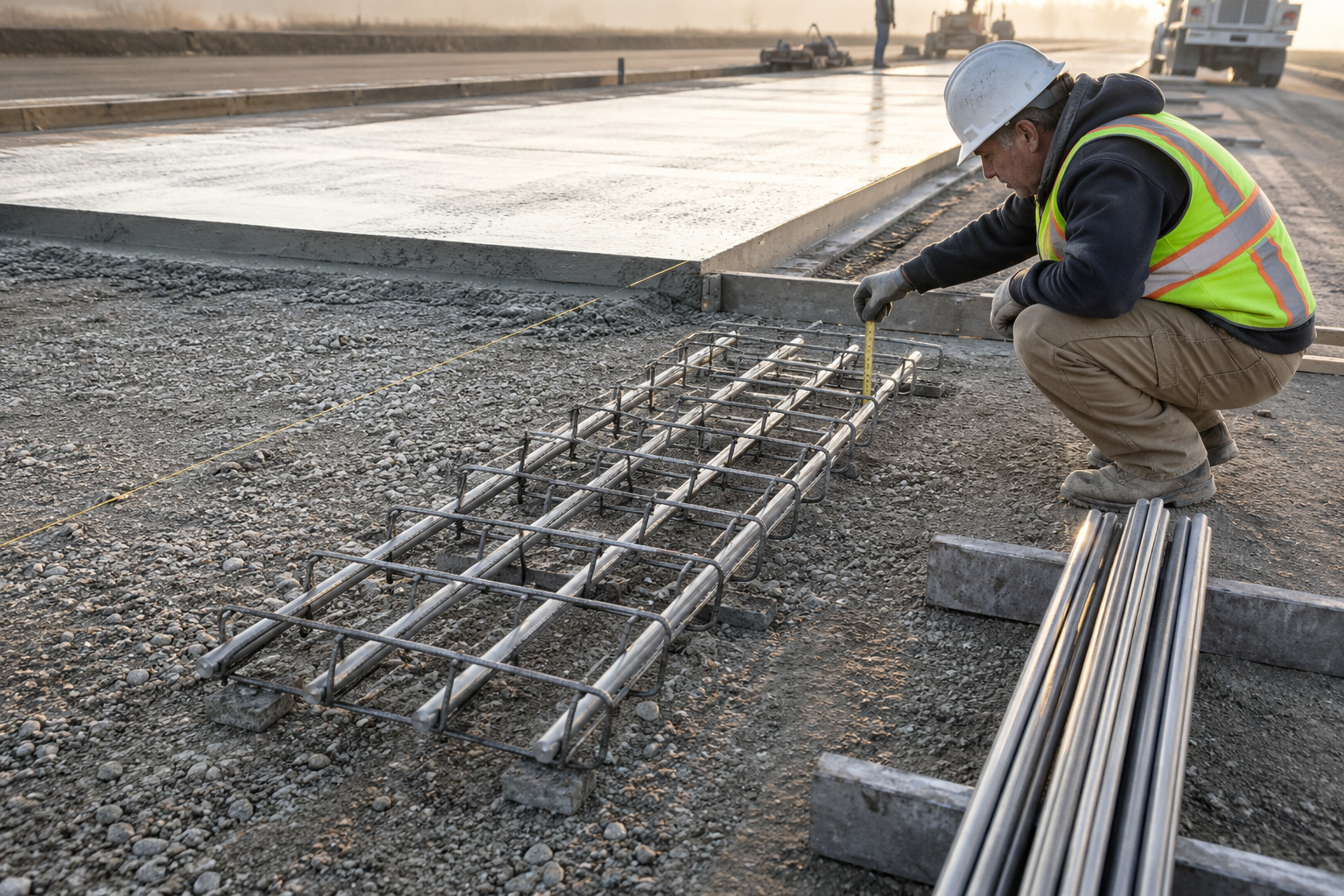
Dowel basket and individual rebar dowels positioned beside a concrete pavement joint.

Comparing Dowel Baskets vs. Rebar Dowels requires more than looking at the diameter or strength of the steel. The products may appear similar, but their placement, alignment, bond characteristics, and intended role within a concrete system can lead to very different performance.

Triumph Construction Supply helps contractors source the concrete products needed for pavement, flatwork, structural, and commercial construction. Understanding how each dowel option functions can help project teams follow the plans, protect joint performance, and avoid preventable installation problems.

Dowel Baskets vs. Rebar Dowels: Which Option Is Stronger?

In a comparison of Dowel Baskets vs. Rebar Dowels, neither option is automatically stronger in every application. A dowel basket provides a supported assembly that keeps smooth dowels properly spaced and aligned across a planned concrete joint. Individual rebar dowels may provide a direct steel connection, but their performance depends heavily on bar type, placement, embedment, and the purpose of the joint.

The better choice is the one specified for the concrete design. For pavement joints that must transfer wheel loads while permitting horizontal slab movement, a properly installed dowel basket is often the practical solution. Individual dowels may be appropriate when a design requires continuity or a connection between separate concrete placements.

Why Joint Movement Matters as Much as Steel Strength

Concrete expands, contracts, curls, and shrinks as temperatures and moisture conditions change. A joint must manage that movement without allowing adjacent slabs to lose support or develop a significant elevation difference. This is why the tensile strength of the steel does not tell the entire story.

Smooth dowels supported by baskets can transfer loads across a joint while allowing controlled movement along the length of the bars. Deformed reinforcing bars bond more firmly with concrete and may restrain movement. That bond can be useful in some construction joints, but it can work against the intended function of a movement joint if the wrong product is installed.

Common Problems Caused by Incorrect Dowel Selection

Using a familiar steel product as a substitute for the specified joint system can create long-term problems. Even strong steel cannot compensate for poor alignment, inadequate embedment, improper spacing, or a bar surface that prevents the required movement.

Potential problems include:

  • joint locking caused by excessive bond or misaligned dowels
  • uneven load transfer between adjacent concrete panels
  • cracking near the joint or slab edge
  • joint faulting under repeated vehicle traffic
  • difficulty maintaining the specified concrete cover
  • movement of individual bars during concrete placement

Contractors should review the project drawings and specifications instead of making a field substitution based solely on bar diameter. Technical resources from the American Concrete Institute can also provide broader guidance on concrete materials, design, and construction practices.

How Dowel Baskets Support Accurate Placement

A dowel basket arrives as an organized assembly with parallel dowel bars held at the required spacing and elevation. The basket is positioned at the planned joint, secured to the base, and checked before concrete placement. Its frame helps prevent the bars from shifting while the crew places and consolidates the concrete.

Alignment remains essential. Dowels that are skewed horizontally or vertically may restrict joint movement, even when the basket itself is the correct size. Crews should verify the centerline, orientation, stability, and specified concrete cover before the pour begins. Contractors planning larger pavement projects can also coordinate dowel basket delivery early enough to support staging and inspection.

How Individual Rebar Dowels Are Installed

Individual dowels are commonly drilled and epoxied into existing concrete, cast into a slab edge, or supported before a second placement. Each bar must be positioned at the specified depth, spacing, and angle. Because there is no welded basket frame holding the complete group in place, installation consistency depends on careful layout and field execution.

The project documents should identify whether the bars are smooth dowels, deformed reinforcing bars, coated products, or another specified type. These distinctions influence bond and movement. A contractor sourcing individual bars can review Triumph Construction Supply’s rebar supply expertise while confirming the material required for the job.

Choosing Dowel Baskets vs. Rebar Dowels for the Application

The decision should begin with the joint’s intended function. Pavement joints exposed to repeated vehicle loads typically need consistent load transfer and controlled movement. Structural connections, slab extensions, and some construction joints may require a more restrained connection. Engineers consider slab thickness, traffic, joint spacing, soil support, bar dimensions, coating, embedment, and environmental exposure when developing the details.

Product availability and installation speed also matter, but they should not override the design. Triumph Construction Supply has served contractors since 2010, and the team’s construction supply experience can help customers confirm product information, obtain quotes, and coordinate deliveries without changing an engineered specification.

Benefits of Matching the Dowel System to the Design

Correctly selected and installed dowels help adjacent concrete sections work together under traffic or other imposed loads. Consistent load transfer can reduce stress along slab edges, improve ride quality, and support more reliable joint performance over time.

The right system can also make installation easier to inspect. A basket gives crews a visible, organized layout before the pour, while individually placed dowels allow targeted connections where a complete basket assembly would not fit the construction method. In either case, accurate placement is more valuable than choosing a product merely because it appears heavier or stronger.

When a Pavement Project Requires Consistent Load Transfer

Consider a distribution facility near Dallas preparing to place a large concrete truck court. The joints will experience frequent loads from trailers and delivery vehicles, so consistent dowel alignment is essential. Comparing Dowel Baskets vs. Rebar Dowels helps the project team recognize that loose bars would require considerably more individual layout and support.

If the plans specify baskets, the contractor can order assemblies that match the slab and joint details, stage them by pour area, and verify alignment before concrete arrives. The organized approach reduces field variability while preserving the movement and load-transfer behavior intended by the design.

Key Takeaways for Concrete Contractors

Dowel basket assemblies and individual dowels are not interchangeable simply because both contain steel bars. Their performance depends on the joint design, bar surface, alignment, embedment, spacing, and installation method.

  • Follow the engineered plans and specifications.
  • Evaluate joint movement as well as load-transfer strength.
  • Confirm bar type, dimensions, coating, and spacing before ordering.
  • Secure every basket or individual dowel against movement during placement.
  • Coordinate materials early to prevent unsupported field substitutions.

Frequently Asked Questions About Concrete Dowels

Are dowel baskets made from rebar?

Dowel baskets contain steel dowel bars supported by a welded wire frame. The dowels are generally designed for load transfer across joints and should not automatically be treated as conventional deformed reinforcing bars.

Can individual dowels provide the same load transfer as a basket?

Individual dowels can transfer loads when their material, spacing, embedment, and alignment match the design. A basket primarily improves consistency by holding multiple dowels in their planned positions during placement.

Why are smooth dowels used at movement joints?

A smooth surface allows concrete sections to move along the dowel while the bar continues transferring loads across the joint. A deformed bar may create more bond and restrict that movement.

What information is needed when ordering dowel baskets?

Provide the project specifications, slab thickness, dowel diameter and length, joint spacing, coating requirements, quantities, and delivery schedule. Complete information helps the supplier identify the correct requested product.

Does Triumph Construction Supply deliver outside Kansas City?

Triumph Construction Supply serves contractors throughout the central United States and offers nationwide delivery on many products. Delivery availability can be confirmed when requesting a quote.

Source the Correct Dowels for Your Concrete Project

For help sourcing the materials specified for your comparison of Dowel Baskets vs. Rebar Dowels, contact Triumph Construction Supply. Contractors can request a free quote or call (816) 444-6000 to discuss product details, quantities, and delivery needs for projects in Dallas–Fort Worth, Kansas City, the central United States, and other available service areas.

What to Ask Before Partnering with a National Geofoam Supplier

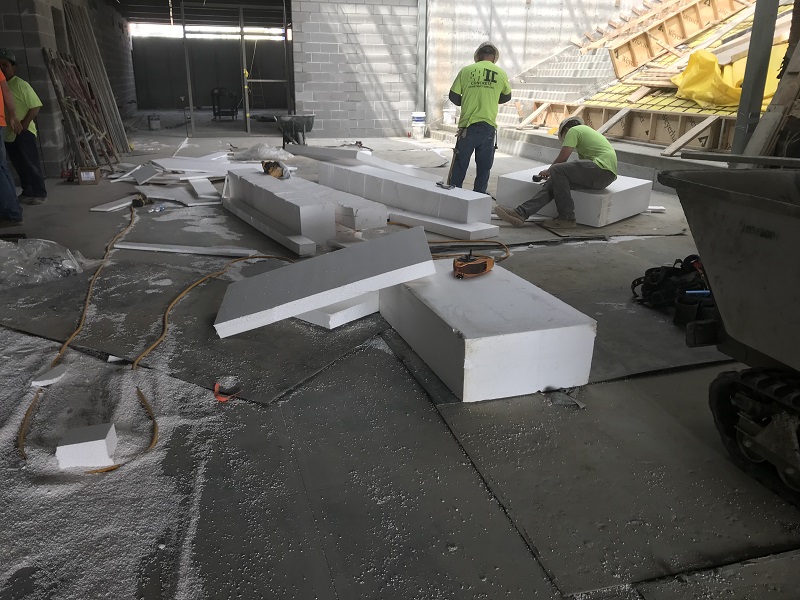
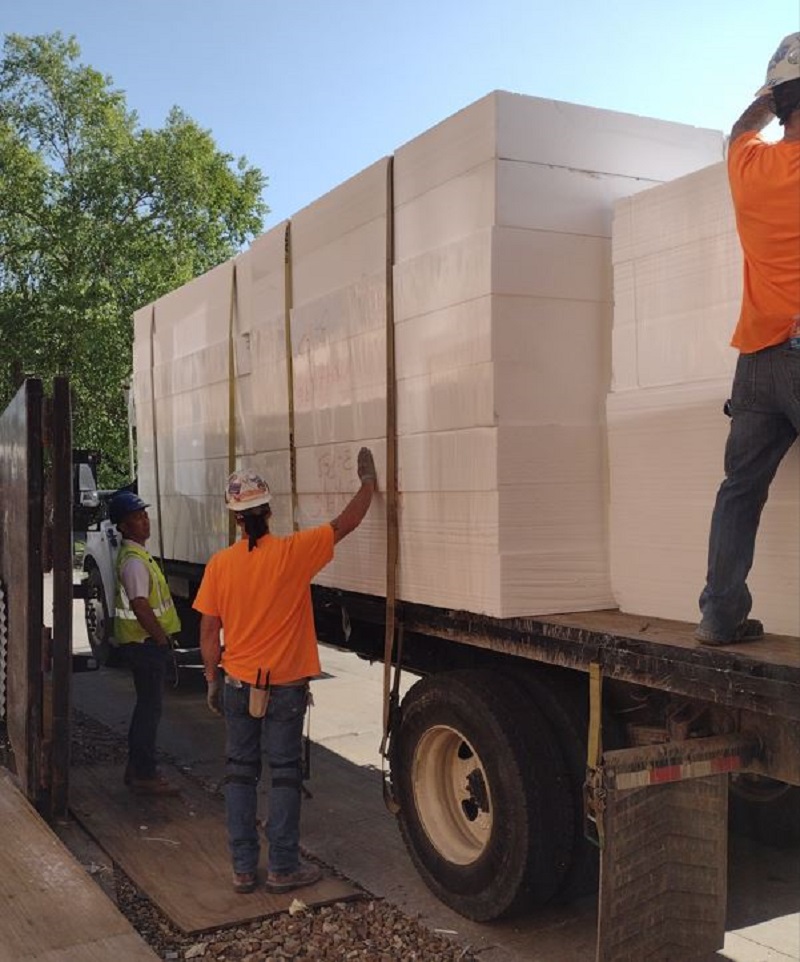
Geofoam blocks arranged at a construction site supplied for a nationwide project.

Geofoam purchasing involves more than locating blocks and arranging transportation. Contractors must account for project specifications, quantities, dimensions, lead times, delivery access, storage, and installation sequencing. Asking the right questions early can prevent expensive disruptions once construction begins.

Triumph Construction Supply helps contractors coordinate construction materials from its Kansas City, Missouri, headquarters. When evaluating a geofoam supply partner, project teams should confirm that the supplier can understand their requirements, provide a clear quote, communicate realistic delivery expectations, and support the order through its arrival at the jobsite.

What Should You Ask a National Geofoam Supplier?

Before placing an order, ask a national geofoam supplier about product specifications, available dimensions, quantity calculations, lead times, freight arrangements, delivery limitations, and jobsite support. The answers should help you determine whether the supplier can fulfill the project requirements without creating avoidable scheduling or logistics problems.

Start with the project documents instead of a general request for pricing. Ask whether the supplier has enough information to prepare an accurate quote and identify any details that still need clarification. A dependable conversation should address the material itself as well as the steps required to move it safely and efficiently to the project.

Why Supplier Evaluation Matters Before You Order Geofoam

Geofoam is a lightweight fill material commonly considered when a project needs to reduce loads on underlying soils or structures. Its light weight offers construction advantages, but it also creates specific transportation, handling, storage, and placement considerations. The order must align with both the design and the construction sequence.

A price alone does not explain whether the proposed material satisfies the project documents or whether delivery will fit the schedule. Evaluating the supplier gives contractors a clearer understanding of what is included, what information is still needed, and what responsibilities remain with the project team.

What Problems Can Affect a Geofoam Order?

Incomplete information is one of the most common sources of purchasing trouble. If the request does not identify the required material properties, block dimensions, total volume, delivery location, or requested arrival date, the quote may not reflect the project’s actual needs.

Contractors should also watch for logistical concerns such as:

  • Ordering before the latest plans and specifications have been reviewed
  • Using rough dimensions without confirming the required quantities
  • Assuming all geofoam products satisfy the same performance requirements
  • Overlooking lead time, freight, or delivery-site restrictions
  • Scheduling delivery before a suitable unloading and storage area is ready
  • Failing to protect lightweight materials from weather or jobsite damage
  • Discovering discrepancies immediately before installation is scheduled

These concerns are easier to address during procurement than after a shipment has left the warehouse.

How Should Contractors Evaluate a Geofoam Quote?

Review the quote against the project documents rather than comparing only the total price. Confirm the specified material requirements, dimensions, quantities, delivery destination, anticipated arrival date, and any stated exclusions. If something is unclear, ask for an explanation before authorizing the order.

Contractors should also ask how lead times are communicated and what information is needed to coordinate freight. The supplier should know about limited delivery hours, narrow access roads, site-security procedures, unloading limitations, or other conditions that could affect arrival. Honest scheduling information is more useful than an aggressive delivery promise that cannot be maintained.

For transportation-related projects, teams can also consult the Federal Highway Administration’s transportation and highway construction resources while reviewing applicable project standards and requirements.

How Can Project Teams Prevent Delivery and Installation Delays?

Early planning is the strongest form of prevention. Begin the supplier conversation when quantities and specifications can still be reviewed without holding up fieldwork. Provide updated project documents and explain when the material must be available—not merely when installation is expected to begin.

Before delivery, designate a receiving contact and prepare an appropriate unloading and storage area. The site team should understand how the shipment will be checked and protected until placement. Because geofoam is lightweight, handling and temporary storage should be planned around actual site and weather conditions.

It may also be helpful to identify related materials during procurement. Contractors coordinating soil reinforcement or separation requirements can explore information about geogrid applications as part of broader project planning.

What Are the Benefits of an Experienced National Supplier?

An experienced supplier can help connect purchasing decisions with practical construction concerns. Responsive communication, fast quoting, delivery coordination, and jobsite support make it easier for contractors to identify issues before they interfere with the schedule.

Triumph Construction Supply has been family-owned and operated since 2010. Its customer service team offers more than 100 years of combined construction supply industry experience, and the company operates a 30,000-plus-square-foot indoor warehouse. Contractors can learn more about the team’s construction supply experience and commitment to serving projects throughout the central United States.

The company supplies geofoam alongside concrete accessories, geosynthetics, masonry products, thermal and moisture control materials, rebar, waterstop, geogrid, and geotextiles. This broad product knowledge can be useful when a project includes multiple construction material needs.

When a Delivery Detail Threatens the Construction Schedule

Imagine a contractor preparing a project several states away from the supplier. The geofoam quantity has been estimated, but the team has not confirmed whether the delivery vehicle can access the designated unloading area. Installation is scheduled soon after the anticipated arrival.

If that access issue is discovered on delivery day, the contractor may need to find another unloading location, reorganize labor, or reschedule part of the work. If the supplier receives the site details earlier, the delivery plan can be discussed before the material is in transit. The contractor can then prepare the receiving area, assign personnel, and confirm how the shipment will be inspected and stored.

This example shows why supplier selection should consider communication and logistics—not just material pricing. Contractors can also review Triumph’s broader construction supply solutions when planning orders that involve several product categories.

Key Questions to Ask Before Selecting Your Supplier

A productive supplier conversation should leave the project team with clear answers about the material, quote, schedule, and delivery. Before placing an order, ask:

  • What project information is required to confirm the correct geofoam?
  • Does the quote match the specified properties, dimensions, and quantities?
  • What lead time should the project schedule allow?
  • How will freight and the delivery window be coordinated?
  • What jobsite access or unloading information is needed?
  • How should the shipment be received, checked, handled, and stored?
  • Who should the contractor contact if the schedule or quantity changes?

Clear responses to these questions help contractors compare suppliers more meaningfully and make a decision based on the complete purchasing experience.

Frequently Asked Questions About National Geofoam Supply

What information is needed for a geofoam quote?

Be prepared to provide the applicable specifications, dimensions, estimated quantities, project location, and requested delivery date. Sharing relevant project documents can help the supplier identify missing details before preparing the quote.

How early should contractors order geofoam?

Begin the conversation as early as the construction schedule allows. Lead time can depend on the project requirements, quantity, destination, and current availability, so contractors should confirm timing directly with the supplier.

Can geofoam be delivered to projects outside Kansas City?

Triumph Construction Supply serves contractors throughout the central United States and delivers many products nationwide. Discuss the specific material, quantity, destination, and schedule to confirm delivery options for your project.

What should be checked when a geofoam shipment arrives?

Compare the delivered material with the purchase documents and project requirements. Check quantities and visible condition before moving the blocks to the prepared storage or installation area.

Why should jobsite access be discussed before delivery?

Delivery vehicles need suitable access, unloading space, and an available receiving contact. Discussing these conditions early reduces the risk of delays or last-minute changes when the shipment reaches the site.

Discuss Your Geofoam Requirements With Triumph Construction Supply

Triumph Construction Supply helps contractors plan material orders, obtain fast quotes, coordinate delivery, and address jobsite concerns. If you need a national geofoam supplier for an upcoming project, request a free quote or call (816) 444-6000. Share your specifications, quantities, destination, and schedule so the team can help determine the next steps for your order.

Solving Jobsite Challenges With A Nationwide Waterstop Supplier: Triumph Construction Supply

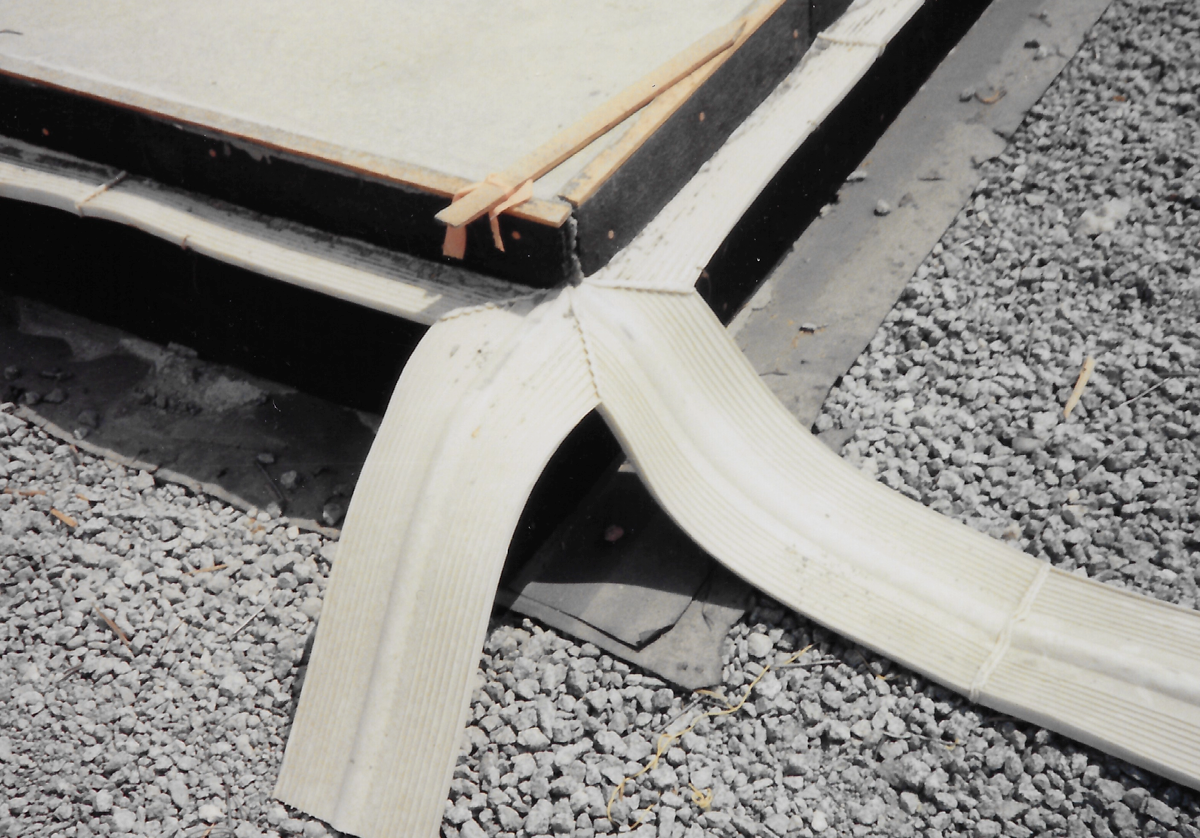
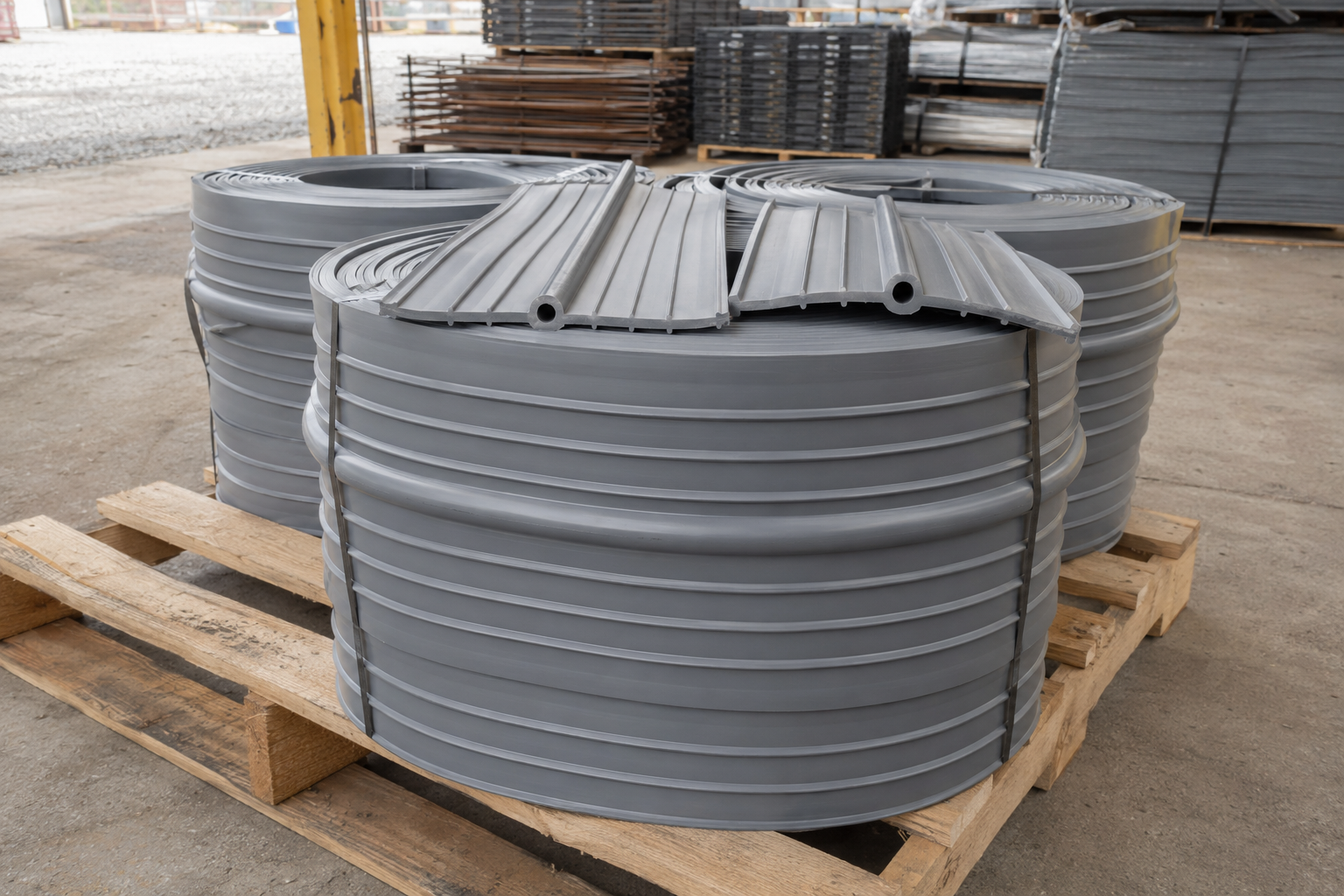
Waterstop materials organized for delivery from a nationwide construction supplier.

Water management details can affect the schedule, durability, and long-term performance of a concrete project. When contractors need dependable materials without unnecessary delays, working with a construction supply company with broad delivery capabilities can simplify procurement and keep crews prepared.

As a waterstop material supplier, Triumph Construction Supply helps contractors obtain products for concrete joints while navigating common concerns involving availability, specifications, delivery, and jobsite timing. Headquartered in Kansas City, Missouri, the family-owned company serves contractors throughout the central United States and delivers many products nationwide.

How Does a Nationwide Waterstop Supplier Solve Jobsite Challenges?

A nationwide waterstop supplier helps contractors identify appropriate materials, receive timely quotes, coordinate delivery, and reduce delays caused by incomplete or unavailable orders. That support gives project teams a more organized way to manage a critical concrete construction detail from procurement through installation.

Waterstop is used at concrete joints where controlling water movement is an important part of the project design. The correct selection depends on factors such as joint conditions, anticipated movement, environmental exposure, project specifications, and the planned installation procedure. An experienced supplier can help contractors evaluate those requirements before materials are sent to the jobsite.

Why Waterstop Procurement Matters to Concrete Construction

Concrete structures frequently include joints that must be addressed as part of the water-control strategy. Waterstop materials are incorporated into these areas to help create a barrier against water passing through the joint. Their role can be especially important in construction where concrete will experience consistent moisture, hydrostatic pressure, or changing site conditions.

Procurement matters because waterstop must be available when the applicable formwork, reinforcing steel, and concrete placement activities are scheduled. A missing component can interrupt more than one trade. It may delay an inspection, prevent a planned placement, or force the contractor to reorganize labor and equipment while waiting for the correct material.

What Problems Can Disrupt a Waterstop Order?

Many waterstop purchasing problems begin with incomplete project information. A request that does not identify the joint condition, required dimensions, applicable specifications, quantity, or delivery deadline may take longer to process. Ordering solely by appearance can also create confusion because materials that look similar may not satisfy the same project requirements.

Common challenges include:

  • Waiting until shortly before concrete placement to begin sourcing materials
  • Submitting an order without reviewing the plans and specifications
  • Underestimating the quantity needed for planned joints and connections
  • Failing to account for the project’s delivery location and receiving limitations
  • Allowing materials to arrive without a suitable storage and handling plan
  • Discovering an order discrepancy only after installation work is scheduled

Early communication helps the supplier understand the request and gives the contractor time to resolve questions before they become schedule problems.

How the Waterstop Supply Process Works

The process generally begins with a review of the project documents. Contractors should identify where waterstop is required, what the specifications call for, how much material is needed, and when it must reach the site. Providing clear information at the beginning supports a faster, more useful quote.

After the order requirements are confirmed, delivery can be coordinated around the project schedule and destination. Contractors should also prepare for receiving, checking, and storing the materials. Comparing the shipment with the order and project requirements soon after arrival leaves more time to address a concern before the scheduled installation.

Triumph Construction Supply operates a 30,000-plus-square-foot indoor warehouse and provides fast quotes, delivery services, and jobsite support. Contractors planning related material purchases can also review the company’s broader construction supply solutions when organizing an upcoming project.

How Contractors Can Prevent Material and Scheduling Problems

The most effective prevention strategy is to begin procurement before the material becomes an immediate need. Waterstop requirements should be reviewed during preconstruction planning instead of during the final days before a concrete placement. That timing allows the project team to clarify details, compare quantities, and coordinate shipping without unnecessary pressure.

A practical request should include the project location, relevant specifications, anticipated quantity, required delivery date, and any known receiving limitations. Contractors should also verify who will accept the shipment and where the material will be protected until installation. These steps are simple, but they help connect purchasing decisions with actual jobsite conditions.

Installation planning remains important after delivery. Crews should follow the project documents and applicable manufacturer instructions for handling, positioning, securing, joining, and inspecting the selected material. The American Concrete Institute’s concrete information is also a useful industry resource for broader education related to concrete design, materials, and construction.

Benefits of Working With an Experienced Construction Supplier

A knowledgeable supplier contributes more than access to materials. Clear communication can help the contractor avoid ordering errors, understand lead times, coordinate delivery, and prepare for installation. This is particularly valuable when a project is located far from the supplier’s headquarters or involves a demanding construction schedule.

Triumph Construction Supply has been family-owned and operated since 2010. Its customer service team brings more than 100 years of combined construction supply industry experience. Contractors can explore the company’s construction supply experience to learn more about its history, warehouse operations, industry involvement, and approach to jobsite support.

The company also supplies concrete accessories, geosynthetics, masonry products, thermal and moisture control materials, rebar, geofoam, geogrid, and geotextiles. Access to related construction materials can make it easier to coordinate multiple project needs through an established source.

A Waterstop Delivery Challenge Before Concrete Placement

Consider a contractor preparing for a scheduled concrete placement several states away from Kansas City. During a final document review, the project team realizes that the waterstop order has not been completed. The crew needs the specified material, but the project manager must first confirm quantities, site requirements, and the delivery window.

By sending the supplier complete information immediately, the contractor can receive a more accurate quote and determine whether delivery aligns with the placement schedule. The receiving team can then prepare to inspect and store the shipment when it arrives. This organized response is far more effective than placing an incomplete order and discovering a mismatch at the last minute.

Contractors researching nationwide fulfillment can also review additional information about waterstop materials and delivery before discussing the needs of a specific project.

Key Takeaways for Choosing a Nationwide Waterstop Supplier

The right supplier should make it easier to move from the project requirements to an accurate order and a workable delivery plan. Contractors should look for responsive communication, relevant construction supply experience, clear quoting, jobsite support, and the ability to serve the project’s location.

  • Review waterstop requirements early in preconstruction planning.
  • Use the plans and specifications to guide the material request.
  • Provide complete quantities, timing, and delivery information.
  • Confirm receiving and storage arrangements before shipment.
  • Inspect materials before the scheduled installation begins.
  • Work with a supplier that understands construction schedules and jobsite concerns.

These practices help prevent rushed decisions and give contractors more control over a detail that can influence both immediate progress and long-term water management.

Frequently Asked Questions About Nationwide Waterstop Supply

Can Triumph Construction Supply deliver waterstop outside Kansas City?

Triumph Construction Supply serves contractors throughout the central United States and offers nationwide delivery on many products. Delivery availability should be discussed for the specific material, quantity, destination, and project schedule.

What information should I provide when requesting a waterstop quote?

Provide the project specifications, required quantity, delivery location, requested arrival date, and any relevant jobsite details. Complete information helps the supplier prepare a more accurate quote and identify questions early.

When should waterstop materials be ordered?

Begin sourcing during project planning rather than waiting until concrete placement is approaching. Additional time gives the team room to confirm requirements, coordinate delivery, and inspect the order.

Can other construction materials be included in the same purchasing plan?

Triumph Construction Supply offers concrete accessories, geosynthetics, masonry materials, thermal and moisture control products, rebar, geofoam, geogrid, and geotextiles. Discussing the complete material list may help contractors organize related purchasing and delivery needs.

What should crews do when a waterstop shipment arrives?

Check the delivered materials against the order and project requirements before installation. Store them appropriately and follow the project documents and applicable manufacturer instructions during handling and installation.

Plan Your Waterstop Order With Triumph Construction Supply

Triumph Construction Supply helps contractors in Kansas City, throughout the central United States, and across the country address waterstop purchasing and delivery needs. To discuss specifications, quantities, timing, or jobsite requirements, request a free quote or call (816) 444-6000. The experienced team can help you organize the order and determine an appropriate delivery plan for your project.

How A Midwest Geogrid Supplier Can Help Reduce Total Project Costs

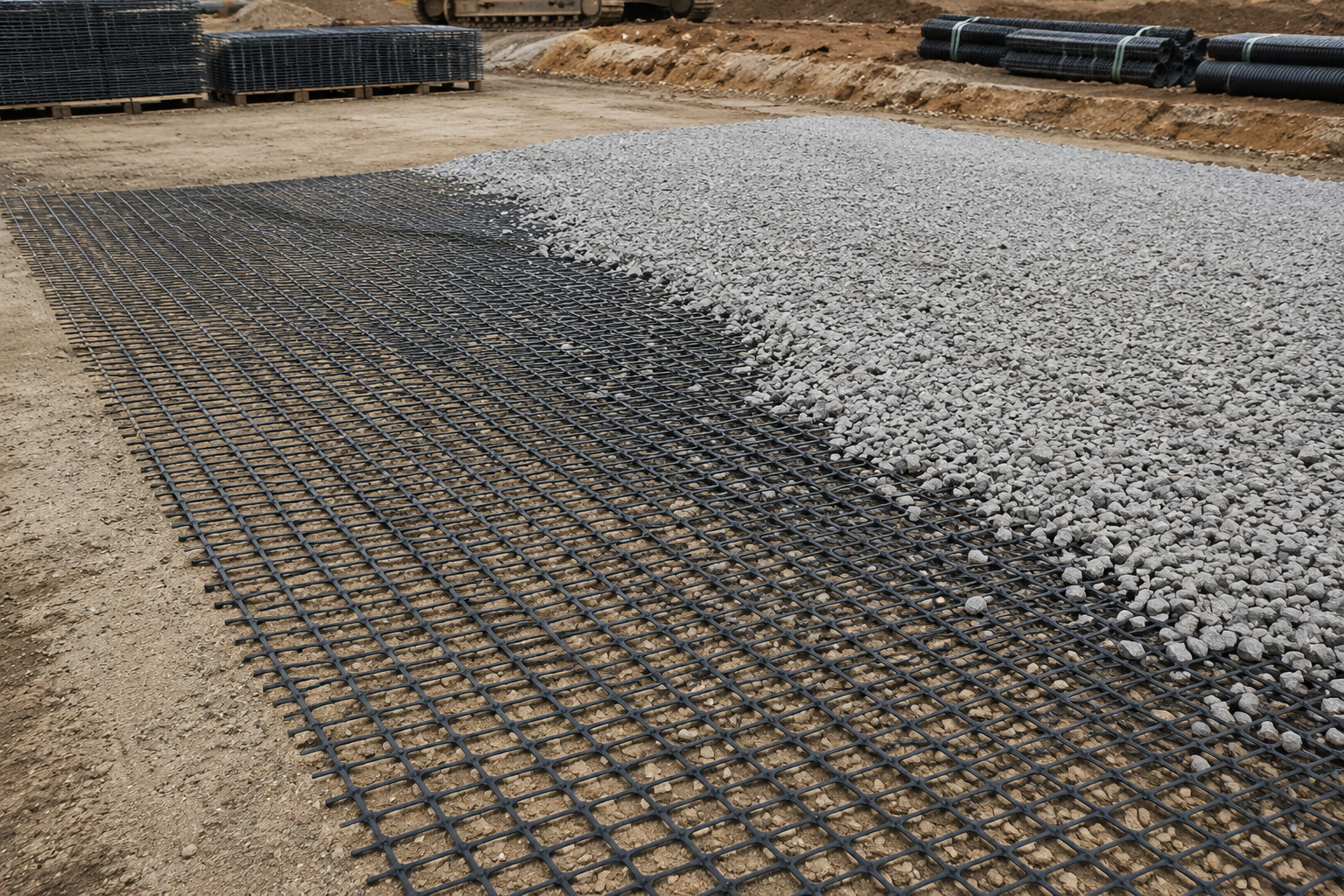
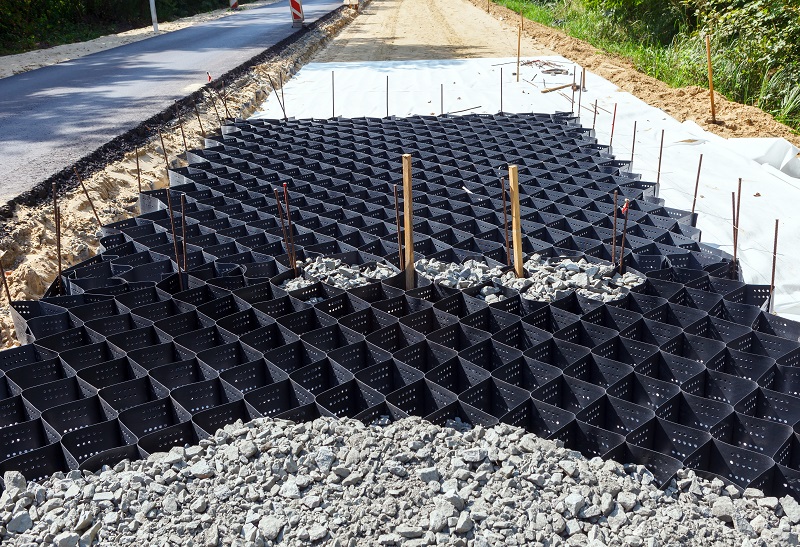
Geogrid reinforcement installed beneath aggregate base material for a Midwest construction project.

Working with the right Midwest geogrid supplier can help contractors control total project costs by improving material selection, reducing jobsite delays, and supporting better base performance. At Triumph Construction Supply, contractors can source dependable geogrid and related construction materials with fast quotes, delivery services, and practical jobsite support from a Kansas City, Missouri-based supply team.

Geogrid is often considered a material cost, but its bigger value is usually tied to project efficiency. When the right product is matched to the right application, it can help stabilize aggregate, improve load distribution, reduce base movement, and limit expensive rework. For contractors across the central United States, those savings can affect labor, equipment time, material quantities, scheduling, and long-term performance.

Why a Midwest Geogrid Supplier Can Lower Overall Costs

A Midwest geogrid supplier can help reduce total project costs by helping contractors choose the correct geogrid for soil conditions, loading needs, site access, and project schedule. The right supplier can also help avoid under-ordering, over-ordering, delivery delays, and product mismatches that can make a job more expensive than expected.

On many projects, the lowest material price is not the same as the lowest installed cost. If the wrong product causes base instability, extra aggregate use, installation delays, or premature repairs, the project can quickly lose any upfront savings. A knowledgeable supplier helps contractors look at the full picture before materials arrive on site.

Why Geogrid Matters in Midwest Construction

Midwest projects often deal with changing soil conditions, moisture, freeze-thaw cycles, heavy traffic loads, and tight construction windows. These conditions can place extra stress on roads, parking lots, access drives, retaining areas, and commercial site work.

Geogrid helps reinforce the base layer by creating interlock between the grid and aggregate. That reinforcement can improve load distribution and help reduce rutting, shifting, and settlement. For contractors, that can mean fewer material surprises and a more stable foundation for the work above it.

Where Project Costs Often Increase

Cost overruns do not always come from one large mistake. They often come from several smaller problems that build throughout the project. A site may need more aggregate than expected, trucks may wait longer than planned, or crews may lose time because materials are not available when they are needed.

We often see contractors focus on geogrid when they want to reduce risks such as:

  • excess aggregate placement
  • soft or unstable subgrade areas
  • schedule delays from late material delivery
  • rework caused by base movement
  • poor coordination between related site materials
  • higher long-term maintenance concerns

By addressing these problems early, contractors can make smarter decisions before equipment, crews, and trucks are already committed.

How Geogrid Helps the Base Layer Perform

Geogrid is installed within or beneath the aggregate base to help confine and stabilize the stone. As loads move across the surface, the grid helps distribute pressure across a wider area instead of allowing the base to shift or deform as easily.

For contractors who want broader technical background, the geosynthetic materials education available through the Geosynthetic Institute can be a helpful industry resource. On the jobsite, the practical value comes from matching the product to the application and installing it with the right base preparation.

Why Supplier Support Matters Before Ordering

Before ordering geogrid, contractors should review site conditions, soil concerns, traffic load, project type, aggregate needs, access limitations, and delivery timing. A Midwest geogrid supplier with practical construction supply experience can help contractors ask better questions before the quote is finalized.

Triumph Construction Supply is family-owned and operated, headquartered in Kansas City, Missouri, and has served contractors since 2010. Our company background includes a 30,000+ square foot indoor warehouse, delivery services, and a customer service team with more than 100 years of combined construction supply industry experience.

Reducing Waste With Better Material Planning

Material waste affects more than the invoice. Extra product can take up jobsite space, slow down handling, create storage problems, or complicate closeout. Too little product can be even more expensive if crews are waiting and installation stops.

Accurate ordering helps contractors control the amount of geogrid needed and coordinate related materials. Resources on geogrid applications can help contractors think through common uses, while broader geosynthetic products may also support site stabilization, drainage, separation, or reinforcement goals.

How Related Materials Can Influence Cost

Geogrid is often part of a larger material package. A contractor may also need geotextile, geofoam, rebar, concrete accessories, waterstop, or masonry materials depending on the project. Coordinating these products through one construction supply team can make communication easier and help reduce last-minute sourcing issues.

For example, geotextile may be considered when separation, filtration, or soil stabilization is also part of the design. Reviewing geotextile solutions alongside geogrid needs can help contractors think about how the full system will perform, rather than treating each product as a separate decision.

When a Soft Subgrade Changes the Budget Conversation

A common situation begins with a contractor preparing a commercial parking lot or access road in the Kansas City area. The project starts with a clear material plan, but wet weather and inconsistent soil make the subgrade less stable than expected. Without reinforcement, the crew may need additional aggregate, more compaction time, or changes to the construction schedule.

In that moment, the question is not simply, “What does the geogrid cost?” The better question is whether geogrid can help reduce base movement, improve aggregate performance, and limit the extra labor and material costs tied to unstable soil. A reliable supplier can help the contractor move quickly while keeping the material decision aligned with the project’s goals.

Benefits of Choosing the Right Geogrid Supplier Early

Early supplier involvement gives contractors more time to compare product options, plan delivery, and coordinate jobsite needs. It also reduces the chance of rushed substitutions when a project is already underway.

The right Midwest geogrid supplier can help contractors:

  • match geogrid to the project application
  • support better aggregate performance
  • reduce costly material delays
  • coordinate delivery with the construction schedule
  • connect geogrid with related site materials
  • improve confidence before installation begins

Those benefits can be especially important for contractors managing multiple crews, changing weather, and demanding project timelines.

Key Takeaways for Contractors

A Midwest geogrid supplier can help reduce total project costs by supporting smarter product selection, better ordering, and more reliable material coordination. Geogrid can also help improve base stability, which may reduce aggregate needs, rework, and schedule pressure when site conditions are challenging.

Contractors should think beyond unit price and consider the full installed cost of the project. The right product, delivered at the right time, with practical supplier support, can make a meaningful difference from site preparation through project completion.

FAQ About Working With a Midwest Geogrid Supplier

What projects commonly use geogrid?

Geogrid is commonly used for roads, parking lots, access drives, retaining areas, and other projects where base reinforcement or soil stabilization is needed.

Can geogrid reduce aggregate needs?

In some applications, geogrid may help improve aggregate performance and reduce excess base movement. The right choice depends on site conditions, design requirements, and project goals.

Why does delivery timing matter for geogrid?

Geogrid is often installed during a specific stage of base preparation. If it arrives late, crews, equipment, and aggregate placement may be delayed.

Does Triumph Construction Supply serve contractors outside Kansas City?

Yes, Triumph Construction Supply serves contractors throughout the central United States and offers nationwide delivery on many products. Delivery options can be confirmed during quoting.

What details help when requesting a geogrid quote?

Project location, application, soil concerns, dimensions, delivery timing, and related material needs are helpful. Clear details make it easier to match the product to the job.

Request Geogrid Support for Your Next Project

Triumph Construction Supply helps contractors in Kansas City, Missouri, throughout the central United States, and nationwide on many product orders with dependable construction materials, fast quotes, delivery services, and jobsite support. To discuss geogrid or related geosynthetic materials, request a free quote or call (816) 444-6000 today.

What to Consider When Selecting Dowel Baskets for Extreme Climate Projects

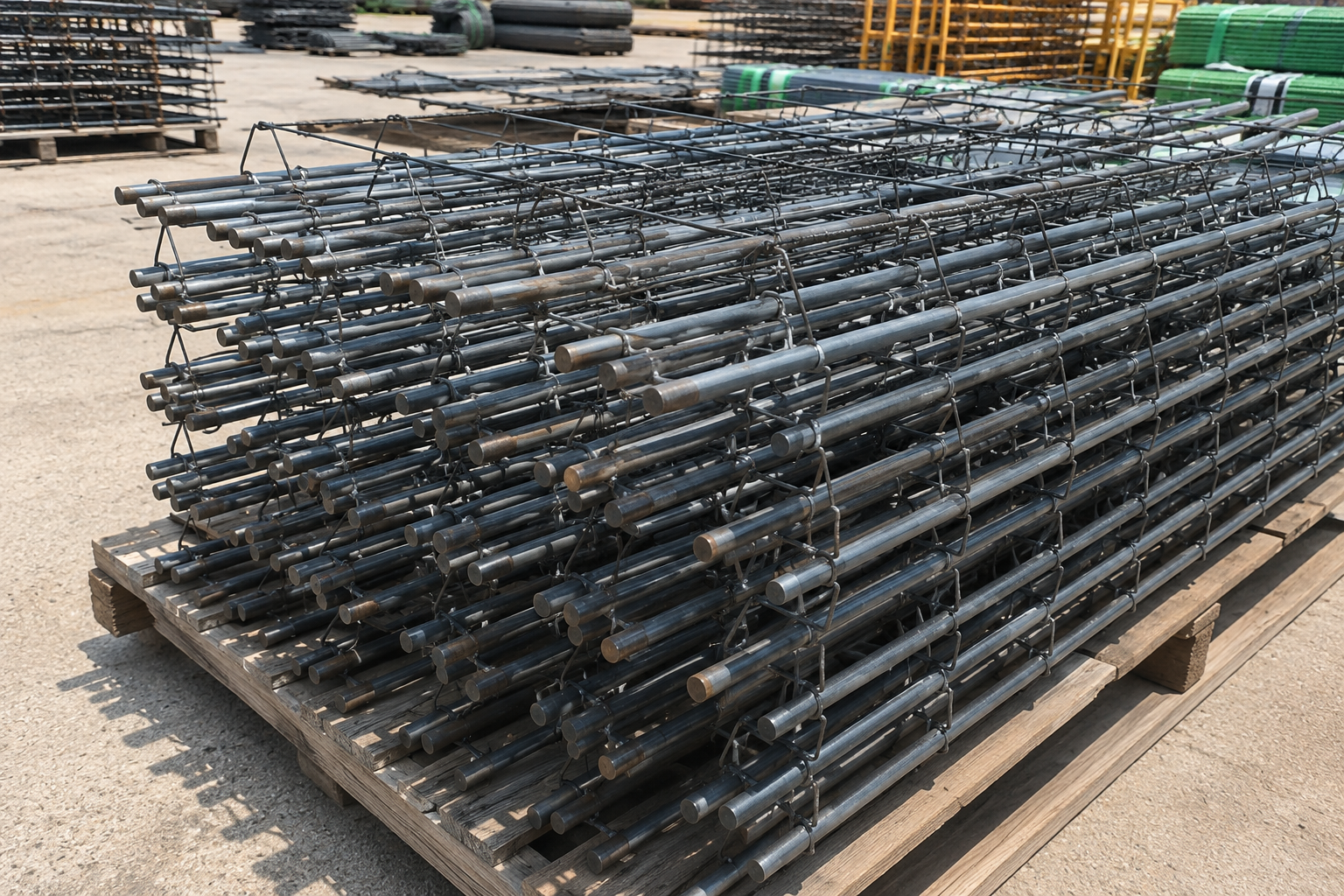
Stacked steel dowel basket assemblies staged in an outdoor construction supply yard for concrete pavement projects.

Selecting dowel baskets for extreme climate projects takes more planning than choosing a standard load transfer product from a list. At Triumph Construction Supply, contractors working in tough temperature swings, freeze-thaw conditions, heavy rain, high heat, and demanding slab environments can source dependable concrete products with practical support from a Kansas City construction supply team.

Dowel baskets play a critical role in concrete pavement and slab performance because they help transfer loads across joints while allowing controlled movement. When climate conditions are extreme, that movement becomes even more important. The right basket size, spacing, steel quality, coating, alignment, and project support can help reduce joint failure, slab faulting, and long-term maintenance problems.

How to Choose Dowel Baskets for Extreme Climate Work

The best way to choose dowel baskets for extreme climate projects is to match the basket design to the slab thickness, joint layout, load requirements, exposure conditions, and expected concrete movement. In cold, hot, wet, or high-traffic environments, contractors should focus on alignment, corrosion resistance, proper dowel sizing, and supplier reliability.

That means the lowest-cost option is not always the safest or most efficient choice. A basket that looks acceptable on paper may create problems if the dowels are poorly supported, the steel is not suited for the environment, or delivery timing disrupts the pour schedule. For climate-sensitive concrete work, product consistency matters before, during, and after placement.

Why Climate Conditions Matter for Dowel Basket Selection

Concrete expands, contracts, curls, and moves as temperature and moisture conditions change. In Kansas City, Missouri, and many central United States markets, pavement may face freezing winter temperatures, spring moisture, summer heat, and repeated thermal cycling.

Dowel baskets help keep jointed concrete sections working together under load. When traffic, equipment, or heavy site use crosses a joint, the dowels transfer that load from one slab panel to the next. If climate-driven movement is not considered, joints can become misaligned, edges can chip, and slabs can settle unevenly over time.

Common Problems When Dowel Baskets Are Underspecified

Extreme climates can expose small specification mistakes quickly. A basket that lacks the correct rigidity can shift during placement. Dowels that are not properly aligned may restrict joint movement. Steel that is not appropriate for moisture exposure may be more vulnerable to corrosion concerns.

We often see contractors ask about dowel basket selection when they are trying to avoid issues such as:

  • joint faulting caused by poor load transfer
  • cracking near joints because movement is restrained
  • basket displacement during concrete placement
  • edge spalling from repeated traffic and weather stress
  • delays caused by short supplies or poor delivery coordination

These problems are not always visible immediately.

How Dowel Baskets Support Joint Performance

Dowel baskets are designed to hold dowel bars in the correct position at concrete joints before and during placement. Their job is simple in concept, but the details are important. The dowels must stay parallel, level, and centered so the joint can open and close while still transferring load.

Good alignment supports smoother pavement performance and helps reduce stress at the joint. Industry resources such as the concrete materials guidance available through the American Concrete Institute can be useful when teams want broader technical context for concrete design, construction, and material behavior.

For contractors, the practical question is whether the supplied basket will perform consistently on the jobsite. That includes the welded assembly, spacing, dowel diameter, and basket stability.

What to Review Before Ordering

Before ordering dowel baskets, review the project drawings, joint spacing, pavement thickness, traffic demands, concrete mix considerations, and climate exposure.

Many customers ask about lead times and delivery options because dowel baskets can affect the entire pour schedule. Triumph Construction Supply operates a 30,000+ square foot indoor warehouse and provides delivery services and jobsite support for contractors who need materials coordinated with real construction timelines. Our construction supply experience helps teams think through product availability, staging, and practical field needs before the order becomes urgent.

Choosing a Supplier for Climate-Sensitive Projects

For extreme climate work, choosing the right supplier is part of risk management. Contractors need a team that understands concrete accessories, communicates clearly, and can support project needs across multiple markets. Triumph Construction Supply is family-owned and operated, headquartered in Kansas City, Missouri, and has served contractors since 2010.

Our customer service team brings more than 100 years of combined construction supply industry experience. That background matters when a contractor needs fast quotes, product coordination, or support comparing dowel baskets with materials such as rebar supply expertise, waterstop, geotextiles, geogrid, geofoam, masonry products, and thermal or moisture control materials.

Where Supporting Materials Can Affect the Decision

Dowel baskets rarely exist in isolation. A project may also involve rebar, vapor barriers, geotextiles, geogrid, drainage materials, waterstop, or other concrete accessories. When site conditions include unstable soils, moisture movement, or heavy loading, these related products may influence how the overall concrete system performs.

For example, a contractor working on a pavement or industrial slab may need to think about subgrade support, drainage, and load transfer together. Resources on geogrid applications and geotextile solutions can help connect those broader material decisions to the performance goals of the project.

When a Weather-Exposed Pour Needs a Smarter Plan

Consider a contractor preparing a large exterior concrete pavement project near Kansas City with an aggressive schedule and changing weather in the forecast. The slab will see heavy vehicle traffic, summer heat, winter freeze-thaw cycles, and frequent moisture exposure. The crew needs dowel baskets that match the joint layout and can be delivered before staging begins.

In that situation, the decision is not just about ordering baskets. The contractor needs to confirm basket dimensions, coordinate delivery, protect the schedule, and make sure the product fits the climate and load demands. A supplier with dowel basket delivery capabilities can help reduce avoidable delays and keep materials moving to the jobsite.

Benefits of Selecting the Right Dowel Baskets Early

Early selection gives contractors more control over cost, schedule, and performance. It allows time to confirm specifications, ask questions, coordinate delivery, and prevent last-minute substitutions that may not fit the project requirements.

The right dowel baskets can help support:

  • better load transfer across joints
  • more consistent joint movement
  • reduced risk of slab edge damage
  • smoother pavement performance over time
  • fewer material-related scheduling surprises

For contractors serving public, commercial, industrial, and large-scale concrete projects, those benefits can make a measurable difference.

Key Takeaways for Contractors

Selecting dowel baskets for extreme climate projects starts with understanding the jobsite, not just the product. Slab thickness, traffic load, joint layout, exposure, moisture, temperature movement, and schedule all matter.

Contractors should review specifications early, confirm product details, and work with a supplier that can support quotes, delivery, and practical field coordination. When the material choice fits the climate and construction plan, the finished concrete system is better positioned for long-term performance.

FAQ About Selecting Dowel Baskets

Why are dowel baskets important in concrete pavement?

Dowel baskets help transfer loads across joints while allowing the concrete to move. This can reduce stress, joint faulting, and uneven slab performance.

Do extreme climates change the type of dowel basket needed?

They can. Projects exposed to freeze-thaw cycles, heavy moisture, high heat, or traffic may require closer attention to dowel size, alignment, coating, and basket stability.

When should contractors order dowel baskets?

Ordering early is best, especially when the project has specific dimensions or delivery needs. Early planning gives time to confirm details and avoid schedule pressure.

Can Triumph Construction Supply deliver dowel baskets outside Kansas City?

Yes, Triumph Construction Supply serves contractors throughout the central United States and offers nationwide delivery on many products. Availability and delivery details can be confirmed during quoting.

What information helps when requesting a quote?

Project drawings, slab thickness, joint spacing, dowel requirements, delivery location, and schedule are helpful. The more complete the details, the easier it is to match the project correctly.

Request Dowel Basket Support for Your Next Project

Triumph Construction Supply helps contractors in Kansas City, Missouri, across the central United States, and nationwide on many product orders with dependable construction materials, fast quotes, delivery services, and jobsite support. To discuss dowel baskets or related concrete accessories, request a free quote or call (816) 444-6000 today.

How a Reliable Geofoam Supplier Prevents Costly Project Delays

geofoam supplier blocks being custom sized for a client at Triumph Construction Supply

How a Reliable Geofoam Supplier Prevents Costly Project Delays

Spring is here, the ground is thawing, and the summer construction season is officially underway! When you are plotting out complex urban landscapes or fixing a tricky foundation, the last thing you need is a stalled timeline. Ultimately, choosing a reliable geofoam supplier prevents massive headaches down the line.

Why Does Your Geofoam Supplier Matter So Much?

Geofoam is an engineered, lightweight cellular plastic block used as structural fill. Therefore, it solves heavy soil settlement issues while putting significantly less stress on underlying utilities. Because of this unique design, it is an absolute lifesaver for soft, unpredictable ground.

The Ripple Effect of Supply Chain Snags

In the USMC, we quickly learned that one delayed supply truck ruins the entire mission. Similarly, in large infrastructure projects, late materials stall out heavy equipment and delay your crews. Consequently, poor quality blocks can fail environmental science standards, leading to expensive, heartbreaking tear-outs.

How We Keep You Moving

  • Massive inventory readiness.

  • Consistent, high-grade structural foam.

  • Rapid, responsive customer service.

Step-by-Step: Getting Your Foam Fast

  1. First, measure your exact void fill or structural footprint.

  2. Next, calculate the necessary load-bearing engineering specifications.

  3. Then, call our team to coordinate the exact drop-off date.

  4. Finally, install the lightweight blocks easily and stay ahead of schedule.

Your Ordering Checklist

  • [ ] Double-check your required block dimensions.

  • [ ] Verify the compressive resistance needed for the site.

  • [ ] Confirm the delivery route for the semi-trucks.

FAQ

What happens if my foam is late?
Missed deliveries halt grading operations and inflate labor costs instantly.

Where do you deliver?
We deliver throughout the United States. Furthermore, we routinely ship to Texas (Dallas, Fort Worth, Denton, McKinney, Grapevine, Plano, Texarkana), Oklahoma (Tulsa, Oklahoma City, Norman, Edmond), Arkansas (Ft. Smith, Bentonville, Fayetteville), Louisiana (Shreveport), Kansas (Kansas City, Wichita, Topeka), and Missouri (Kansas City, Springfield, St. Louis).

Why use geofoam instead of soil?
It is exponentially lighter than traditional soil layers, which significantly speeds up the build.

Protect Your Construction Timeline

Do not let a bad supply chain ruin your hard work. Trust Triumph Construction Supply as your premier geofoam supplier to keep your site active. Contact us today for a free quote!

What Makes Triumph Construction Supply a Preferred Waterstop Supplier

waterstop-triumph-construction

As spring rains roll across the Midwest, managing site drainage becomes a major priority. Water always finds the path of least resistance. Therefore, partnering with a reliable waterstop supplier is absolutely crucial for homeowners and urban planners alike.

Why Find a Dedicated Waterstop Supplier?

Think of a waterstop like the structural equivalent of a well-designed theater set; it works invisibly behind the scenes to keep the show running. Specifically, it is a flexible barrier embedded within concrete joints to block moisture. Consequently, a dedicated supplier provides the exact technical materials required to combat heavy hydrostatic pressure.

Dependability and Strategic Range

In the USMC, we learned that preparation prevents poor performance. Furthermore, sound environmental science dictates that we must respect groundwater dynamics. Triumph Construction Supply carries a massive inventory of PVC, bentonite, and rubber profiles. Moreover, major contractors continually choose us because our dependability and technical expertise are unmatched.

Proven Excellence Across the Map

Software developers use agile methods to solve problems quickly. Similarly, we use agile logistics. However, unlike code, physical materials require actual trucks. We proudly offer nationwide delivery across the United States.

Here are a few case examples:

  • Texas Infrastructure: Fort Worth and Denton crews faced heavy rains. Thus, we delivered custom profiles right on schedule.
  • Oklahoma Planning: Tulsa developers needed robust, chemical-resistant barriers. Therefore, we supplied exact specifications.
  • Missouri Commercial Builds: Kansas City and St. Louis teams battled sudden thaws. Consequently, our immediate dispatch saved their foundations.

Step-by-Step Installation Planning

  1. Assess your regional soil conditions thoroughly.
  2. Review our highly specific product catalog.
  3. Consult our team to map out the best design strategy.
  4. Receive your materials directly at your site.

The Pre-Pour Checklist

  • [ ] Verify your joint movement constraints.
  • [ ] Choose the correct material for your environment.
  • [ ] Confirm delivery logistics with your waterstop supplier.

FAQ

What exactly does this product do?
It physically stops groundwater from breaching your concrete structure.

Do you ship nationwide?
Absolutely. We ship coast to coast, including key hubs in Arkansas, Kansas, and Louisiana.

Why choose Triumph?
We pair blue-collar grit with high-level technical precision.

Protect Your Project

Do not let unpredictable weather compromise your hard work. Trust us to deliver exactly what you need. Contact us today for a free quote!

Why Local Expertise Matters in a Geogrid Supplier

Geotextile supplier helps with road construction projects

When you build roads or lay foundations in the Midwest, you fight the dirt every day. You need a trusted geogrid supplier who knows the local ground, not just some out-of-state rep reading a catalog.

Why Does Regional Knowledge Give You an Edge?

A geogrid is a tough synthetic mesh used to reinforce soil and lock aggregate in place. It locks aggregate and dirt in place so your site stays structurally stable. However, ground conditions change fast across regions. A grid that holds up a Dallas parking lot might fail in a freezing Kansas City trench. Local experts know the difference.

Weather and Dirt Are Local Problems

The Midwest throws everything at a job site. Heavy rains turn Arkansas soil to thick mud. Texas and Louisiana deal with expansive clay that heaves and cracks under pressure. Missouri and Kansas face brutal freeze-and-thaw cycles that destroy weak bases. A local supplier understands these exact challenges and local DOT regulations.

The Midwest Advantage

  • Accurate material recommendations for regional soil types.
  • Faster logistics and direct job site delivery.
  • Fewer weather-related project delays due to rapid sourcing.

Step-by-Step: How We Secure Your Base

  1. We review your project specs and local soil conditions.
  2. We recommend the exact grid strength for your specific weather zone.
  3. We load our trucks and deliver straight to your Midwest job site.

Your Site Prep Checklist

  • [ ] Verify your supplier knows local building and DOT regulations.
  • [ ] Match the grid strength to your specific soil report.
  • [ ] Confirm the supplier can deliver directly to your exact city.

FAQ

What makes a reliable geogrid supplier?
Fast delivery times and a deep understanding of local soil and weather conditions.

Where do you deliver?
We deliver across the Midwest, including Texas, Oklahoma, Arkansas, Louisiana, Kansas, and Missouri.

Do you offer free quotes?
Yes. We provide fast, free quotes for all contractors so you can budget accurately.

Get the Right Grid for Your Dirt

Don’t risk your base on the wrong materials. Choose Triumph Construction Supply as your go-to geogrid supplier. We know the Midwest because we live and work here. We deliver directly to Texas (Dallas, Fort Worth, Denton, McKinney, Grapevine, Plano, Texarkana), Oklahoma (Tulsa, Oklahoma City, Norman, Edmond), Arkansas (Ft. Smith, Bentonville, Fayetteville), Louisiana (Shreveport), Kansas (Kansas City, Wichita, Topeka), and Missouri (Kansas City, Springfield, St. Louis). Contact us today for a free quote!

How Dowel Basket Spacing Affects Joint Behavior in Slabs

Benefits-Dowel-Baskets-Construction-Projects-Triumph-Construction-Supply

Accurate dowel basket spacing is critical for concrete slabs. It spreads heavy loads evenly across joints and prevents structural failure.

When you pour a slab, you want it to last. That means getting the engineering details right from the start. One of the most critical details is placing your dowel baskets correctly to handle heavy traffic.

How Does Spacing Change Dowel Basket Behavior?

Dowel baskets are welded steel wire frames that hold dowel bars at the exact center of a concrete slab. Proper spacing ensures the slab transfers heavy loads smoothly across the joint. If you space them wrong, the joint eventually fails under pressure.

The Impact of Incorrect Dowel Basket Spacing

If you space bars too far apart, you create extreme stress concentration. The concrete takes too much weight in one localized spot. This causes poor load transfer, cracking, and severe faulting. Standard design formulas usually require a 12-inch spacing guideline to spread the weight evenly and keep the joint stable.

Visualizing the Difference

  • Correct Spacing (12-inch centers): Even load transfer, a smooth ride, and zero joint faulting.
  • Incorrect Spacing: High stress concentration, sunken slabs, and expensive tear-outs.

Steps for Proper Layout

  1. Measure your joint lines accurately before the pour.
  2. Mark the exact center of your slab depth.
  3. Place the dowel baskets perfectly parallel to the traffic flow.
  4. Anchor the frames securely so they do not move during the pour.

Your Pre-Pour Checklist

  • [ ] Check project specs for the exact bar size.
  • [ ] Verify the 12-inch spacing formula is applied.
  • [ ] Make sure all bars sit dead level.
  • [ ] Order materials from a reliable supplier.

FAQ

What are dowel baskets?
They are wire assemblies that hold steel dowel bars in place to transfer loads across concrete joints.

Why is the 12-inch formula standard?
Engineers use 12-inch spacing to prevent stress concentration and safely distribute heavy vehicle weight.

Do you ship nationwide?
Yes. We deliver directly to job sites across the United States.

Get the Right Dowel Basket for Your Project

Don’t gamble with your joints. Let Triumph Construction Supply help you meet engineering specs with the exact dowel baskets you need. Contact us today at 816-444-6000 for a free quote.

The Financial Benefits of Working with a Full-Service Geofoam Supplier

Geofoam supplier delivers product.

When you are managing a large-scale construction project, every dollar and every hour counts. One of the smartest ways to stay under budget is by choosing the right geofoam supplier. While some companies just sell you the material, Triumph Construction Supply is a full-service supplier.

What Does “Full-Service” Actually Mean?

A full-service supplier handles your project from the initial idea to the final delivery. This includes design consultation to make sure you aren’t over-ordering, technical assistance to solve onsite challenges, and bulk pricing. Instead of hiring three different consultants, you get all that expertise in one place.

Why It Saves You Money

Working with a single geofoam supplier simplifies your entire operation. 

  • First, it reduces costs like the time spent coordinating between several different companies. 
  • Second, it minimizes your risk of expensive errors by getting you what you need the first time. 

When your supplier understands the technical aspects of the geofoam, they can ensure the material is cut and delivered perfectly for your specific site needs.

The Triumph Construction Supply Advantage

At Triumph Construction Supply, we offer start-to-finish project support. We don’t just ship blocks, we act as a partner in your success. Whether you are working on a bridge in Dallas, a landscape project in Oklahoma City, or a road project in Kansas City, we provide the technical knowledge needed to keep things moving smoothly.

Nationwide Delivery and Free Quotes

We take pride in our ability to ship across the United States. We frequently serve major hubs including:

  • Texas: Fort Worth, Denton, McKinney, Plano, and Texarkana.
  • Oklahoma & Arkansas: Tulsa, Norman, Edmond, Ft. Smith, and Fayetteville.
  • The Midwest: Wichita, Topeka, Springfield, St. Louis, and Shreveport, LA.

In conclusion, choosing a full-service partner is the easiest way to simplify logistics and reduce your costs. Contact us today for a free quote on your next project!